
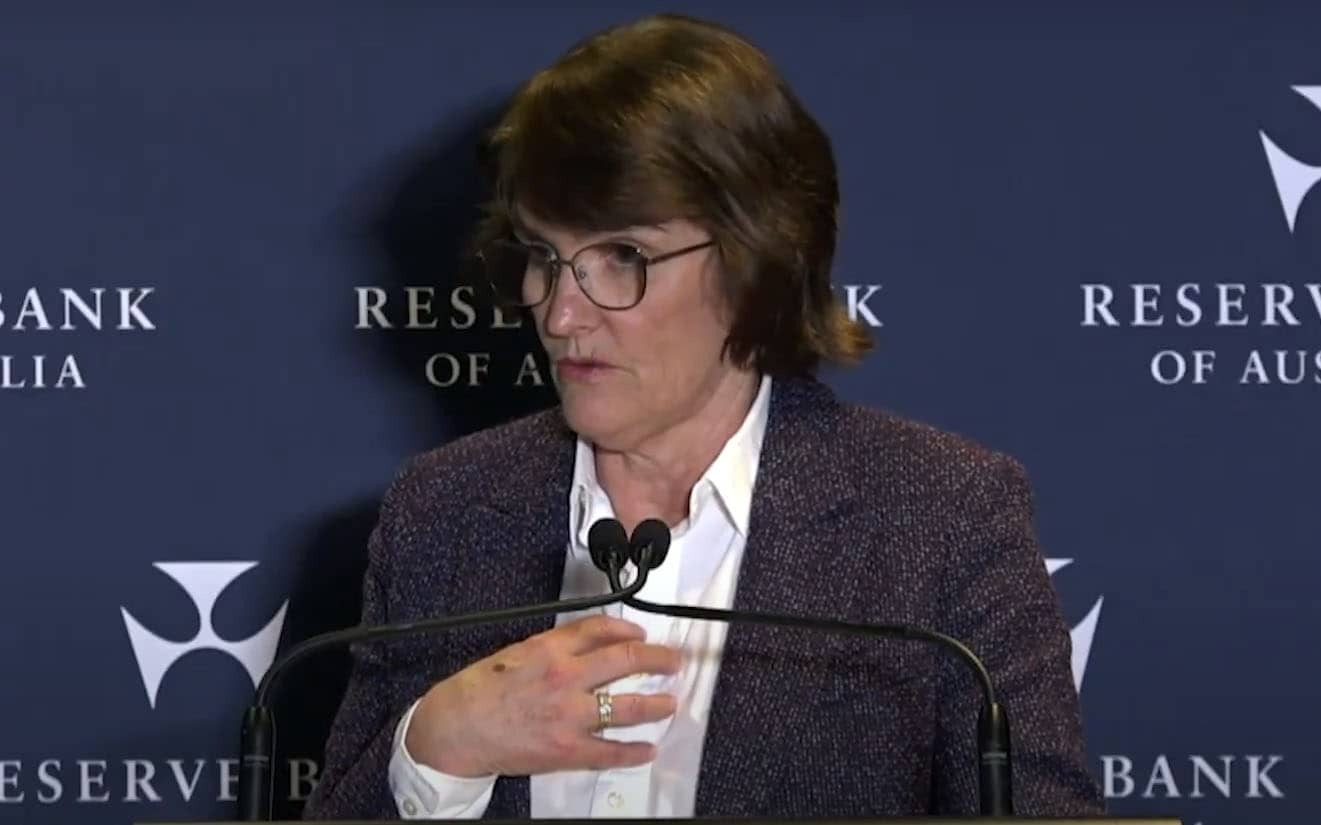
File image of Governor Michelle Bullock. Source: RBA.
The Australian dollar's constructive outlook was bolstered by Reserve Bank of Australia (RBA) Governor Michelle Bullock's 'hawkish' comments on the economy.
In a midweek appearance before the Senate Economics Legislation Committee, Bullock said the country's labour market is "a little tight", and the output gap has "probably closed".
This is how economists say the economy is at a point that it is at risk of becoming increasingly inflationary, something the RBA would guard against.
She said persistent inflation will affect the future policy path and the RBA is "alert to the possibility CPI pressures might be building."
"If CPI pressures build, the board will respond accordingly," she says.
This "development that would encourage a stronger Australian dollar," says MUFG Bank Ltd in a note released Wednesday.
Bullock's comments signal that the RBA has shifted from a rate cutting cycle and is in the early stages of laying the path to higher rates. As recently as August, Bullock was preparing the market for another interest rate cut, having reduced the cash rate by 25 basis points.
But the 'curve' has adjusted massively and money market pricing shows investors are now positioned for a hike in the second half of 2026. This
"The Australian rate market has moved to almost fully price in a rate hike from the RBA in light of the tighter than expected labour market conditions and the pick-up in inflation pressures," says a note from MUFG Bank Ltd.
ANZ, one of the country’s largest lenders, said this week it has readjusted its expectations for the future of Australian rates.
Economists at the bank say they now expect the cash rate to remain at 3.60% for an "extended" period, marking a significant shift from earlier forecasts that assumed additional easing in 2026.
The bank says recent inflation pressures, steadier economic growth and a labour market moving into balance mean the RBA is unlikely to deliver further cuts.
At the same time, ANZ says it is "difficult to see a rate hike in 2026", pointing to the rise in unemployment over the past year and conflicting signals across demand indicators.