
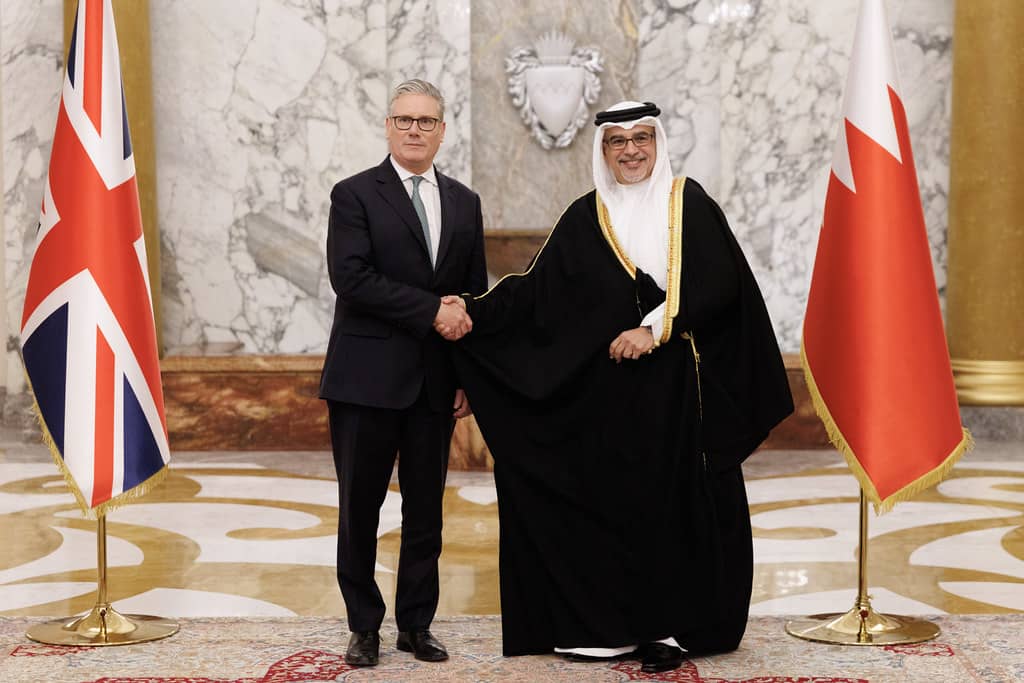
PM Starmer is touring the Middle East, hoping his stance in the Iran conflict will bolster his popularity. Pictured: Starmer meets Bahrain's Crown Prince and Prime Minister Salman bin Hamad Al Khalifa at the Al-Sakhir Palace. Picture by Simon Dawson / No 10 Downing Street.
Pound sterling has seen its recovery against the euro stall, and strategists at a number of investment banks look for a resumption lower.
Strategists at Citi updated clients Thursday to say they continue to look for opportunities to sell the pound against the euro, saying they are "patient dip buyers in select relative value expressions like AUDNZD and EURGBP ahead of upcoming catalysts."
JP Morgan's London trading desk sees the same direction of travel, with a note from the desk saying their GBP trader added to a EURGBP 'long' trade this week (i.e. bought euros versus the pound), saying "the political situation is about to heat up with Rayner waiting in the wings."
This reminds us that although the Middle East is in the driving seat for markets, the domestic setup will become increasingly important as we count down to May's local elections. Any rise in political uncertainty will prove to be a headwind for the pound. With risks building, those with GBP outgoing payments should act now to protect their rates.
Former Deputy Prime Minister Angela Rayner has this week committed to campaigning for Labour in the vote, which political analysts say will raise her profile. It is widely speculated she will lead the charge for the Labour Party's left wing in trying to topple the Prime Minister.
With May in mind, Prime Minister Starmer is devoting significant time to the international stage, judging that his stance in the Middle East conflict will help revive his dire popularity ratings.
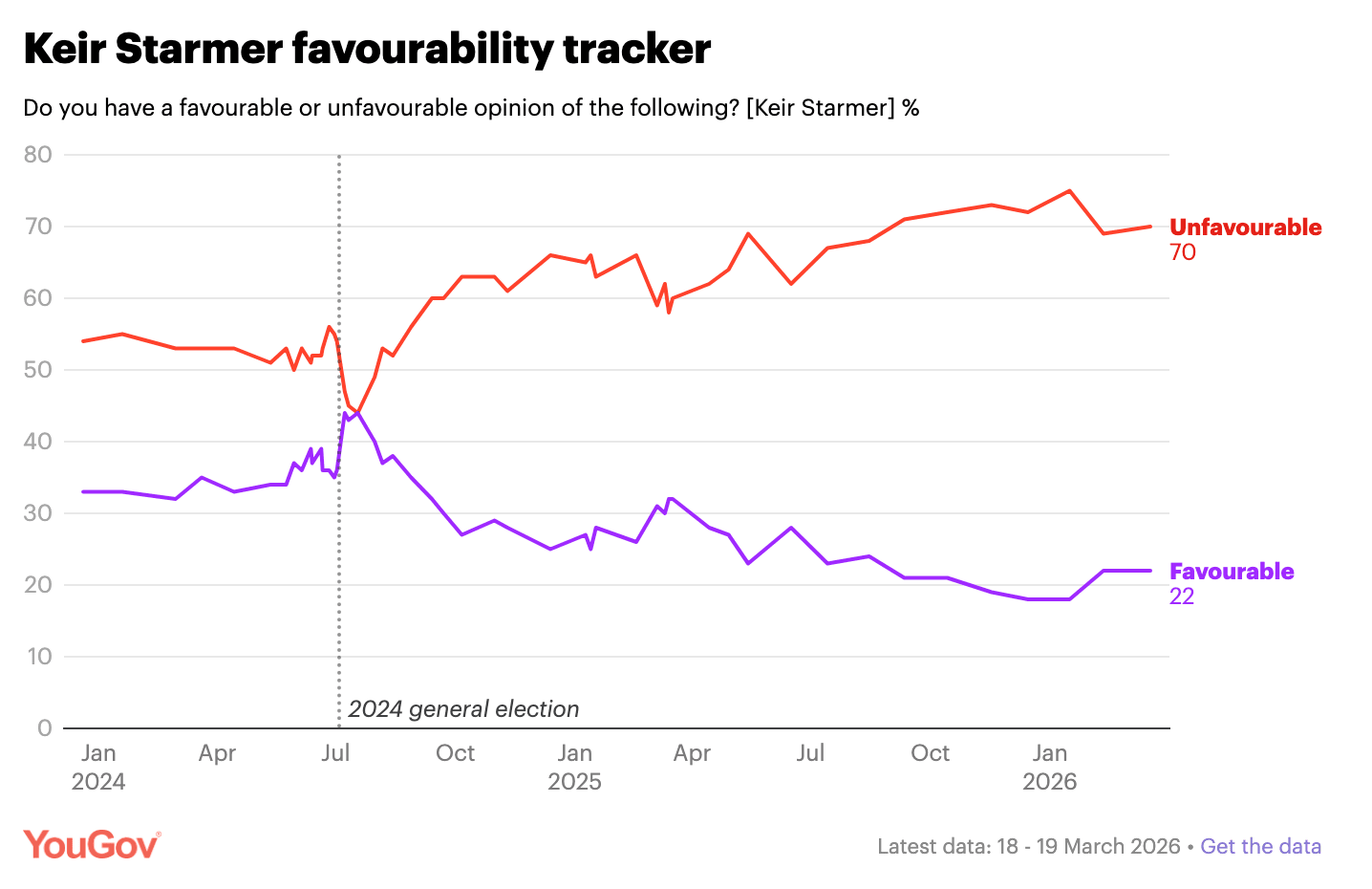
Markets are nervous of Starmer being replaced with Rayner, who has clear socialist tendencies, judging a leftward shift in policy will diminish the country's already vulnerable financial setup.
Immediate attention is nevertheless fixed on the Iran conflict.
GBP/EUR rose early in the week as investors welcomed a ceasefire in the Middle East, but by Thursday it was clear that the agreement was very shaky and not much has improved in the region.
For GBP/EUR and GBP/USD this confirms there are limits to near-term upside potential, and we think this means GBP/EUR getting past 1.1520 (the midway of the broad July '25-present range) will be an endeavour.
If the pound is struggling to push higher, today’s level may be closer to the top of the recent range than the bottom, which can make this a sensible moment to secure value. Benchmark your bank's transfer costs against competitive providers using our co-branded cost analysis.
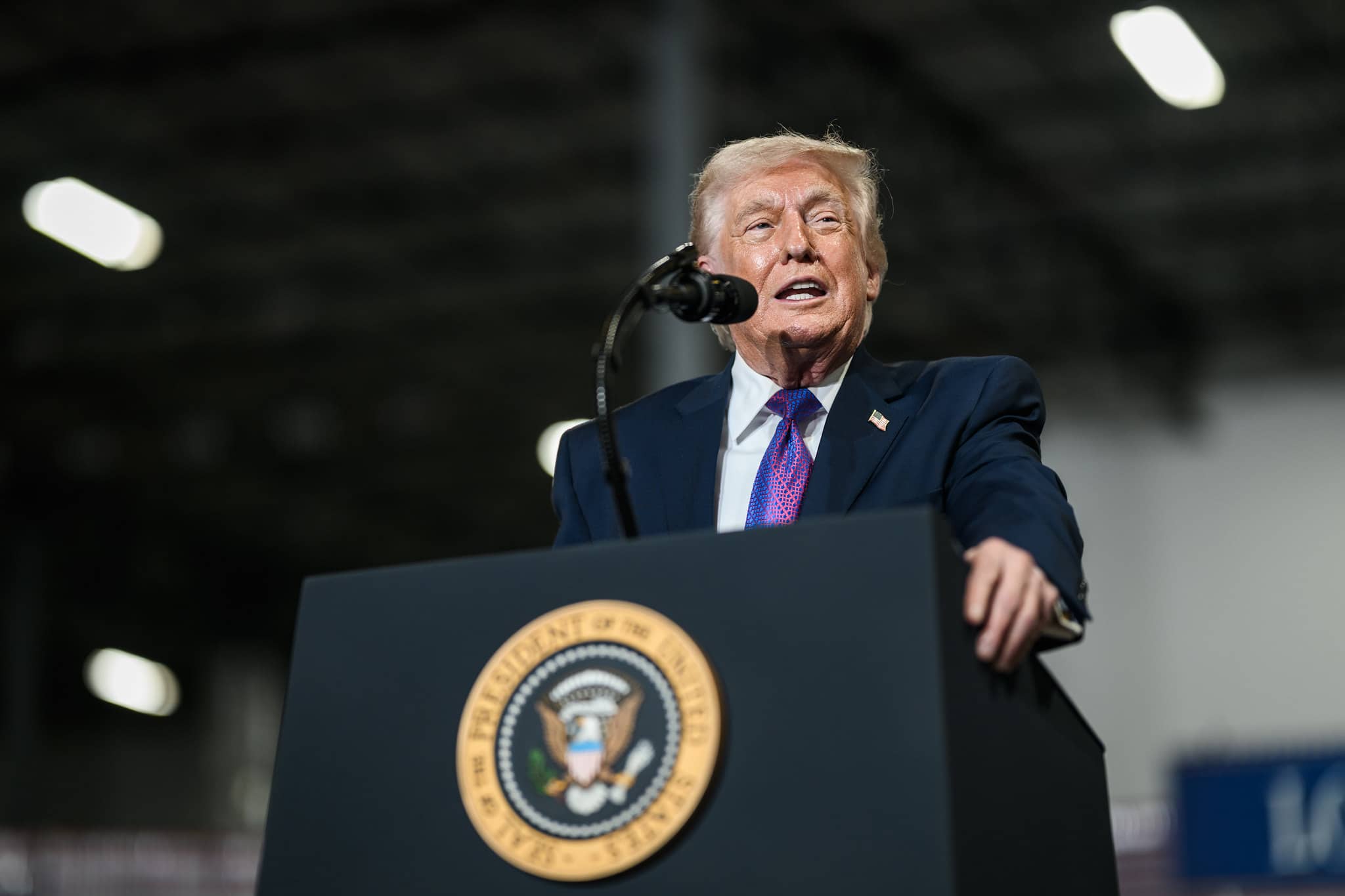
Official White House Photo by Joyce N. Boghosian
Markets remain in a low-visibility environment. U.S. President Donald Trump said overnight he is not happy with Iran's adherence to the ceasefire, as it has not opened the Strait of Hormuz.
Only ten ships have been allowed through since the ceasefire was announced, and none were fuel carriers.
"Free passage of shipping through the Strait of Hormuz also faces a huge ‘interpretation gap’ between the parties involved as Iran holds to its point that any passage will be subject to necessary arrangements with the Iranian authorities to securely pass," explains a new analyst note from KBC Bank.
The longer this low-visibility environment continues, the longer energy prices remain elevated and the higher the inflation risks.
"Any normalisation of supply from the Persian Gulf probably won’t occur anytime soon," says KBC.
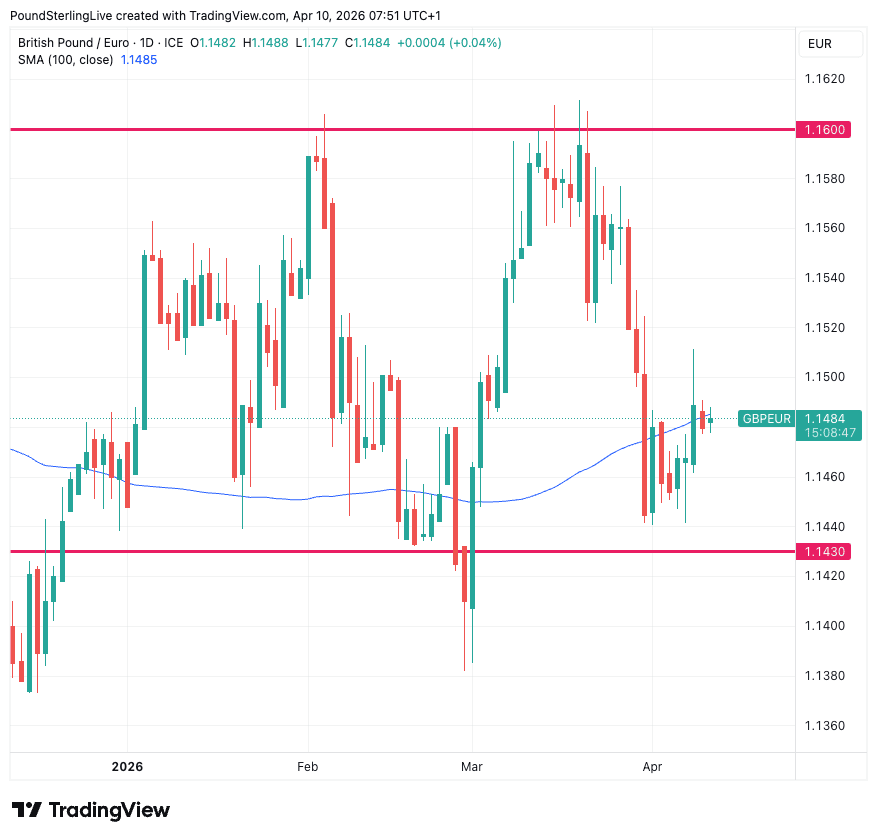
Above: GBP/EUR is capped by the 100-day moving average.
Some analysts explain the current low-visibility environment might be more supportive for the pound than the euro.
This is because the ECB is seen raising interest rates in the coming months in response to increased inflationary pressures stemming from the war in the Middle East, and analysts say that's helping euro exchange rates more broadly.
"The ECB hiking into a crisis could be bad for the EUR. But if they are hiking because oil is higher-for-longer, labour markets are tight, equities are ripping, and life is okay… That’s bullish EUR," says Brent Donnelly, analyst at Spectra Markets.
Expectations for higher Eurozone interest rates has helped the euro advance against the dollar over recent sessions, and emerging momentum on EUR/USD could reflect in a higher EUR/GBP (lower pound).
With outcomes highly uncertain, many euro buyers are now focusing on protecting their budget rather than trying to time the perfect rate.
Sure, the Bank of England is seen raising interest rates too, but economists warn the UK economy looks more vulnerable owing to rising unemployment and the fact that inflation was already elevated ahead of the war.
Economists at Nomura say the ECB will raise rates before the Bank of England does, which will drive a wedge between the euro and pound.
"We believe the ECB is more likely than the BoE to raise rates in response to the energy crisis from the Iran war, while market pricing for both the ECB and BoE suggests they will respond in practically the same way," says Andrzej Szczepaniak, an economist at Nomura.