

Picture by Simon Dawson / No 10 Downing Street
Pound sterling edges lower against the euro with political risks seen building.
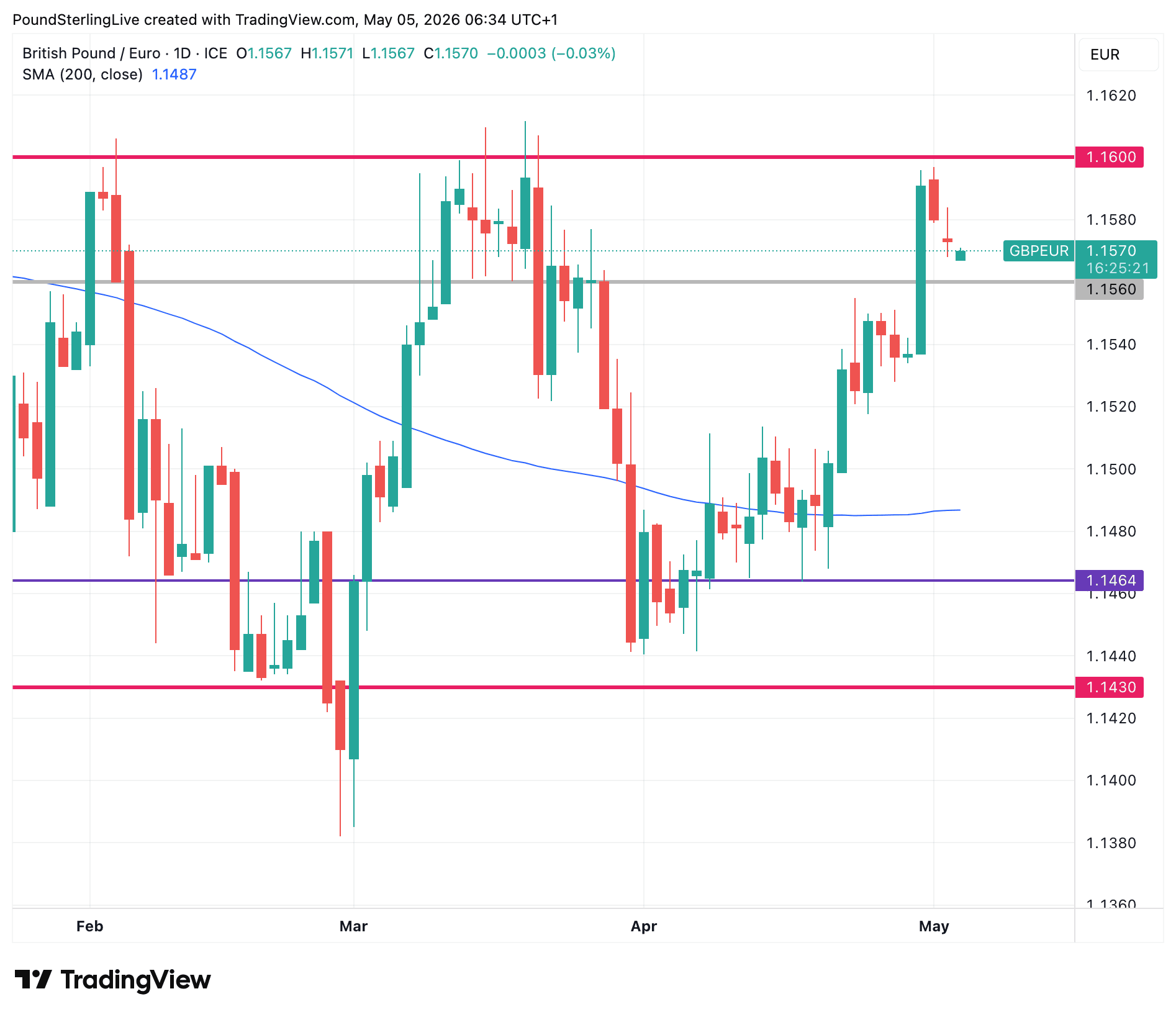
The pound-euro exchange rate rose as high as 1.16 last week where it met a formidable technical resistance zone and halted.
This week sees the pair retrace slightly to 1.1575 and enter a consolidation phase, helped by Monday's UK public holiday and potential apprehension ahead of Thursday's local election which could create renewed political uncertainty.
Technicals are supportive: momentum is constructive as per the popular trend indicators, and should the current dip remain shallow, a move above 1.16 is possible.
"We still see room for EURGBP to grind lower in the near-term," says a note from TD Securities. (EUR/GBP lower = GBPEUR higher).
Note that the exchange rate has not recorded a daily close above 1.16 since August 2025, and even that was fleeting. In fact, the pair has not traded above this marker on a regular basis since June 2025.
Pound sterling could make a break through this tough resistance zone if markets continue to trade on fundamentals alone: notably, UK bond yields are elevated compared to those of the Eurozone, a scenario cemented by last week's central bank policy decisions that showed neither the Bank of England nor the ECB is cutting rates this year.
The chart below shows the UK's two-year bond yield advantage over that of Germany (top panel) has been rising again in recent weeks. When overlaid above the GBP/EUR chart we can see that's been supportive:
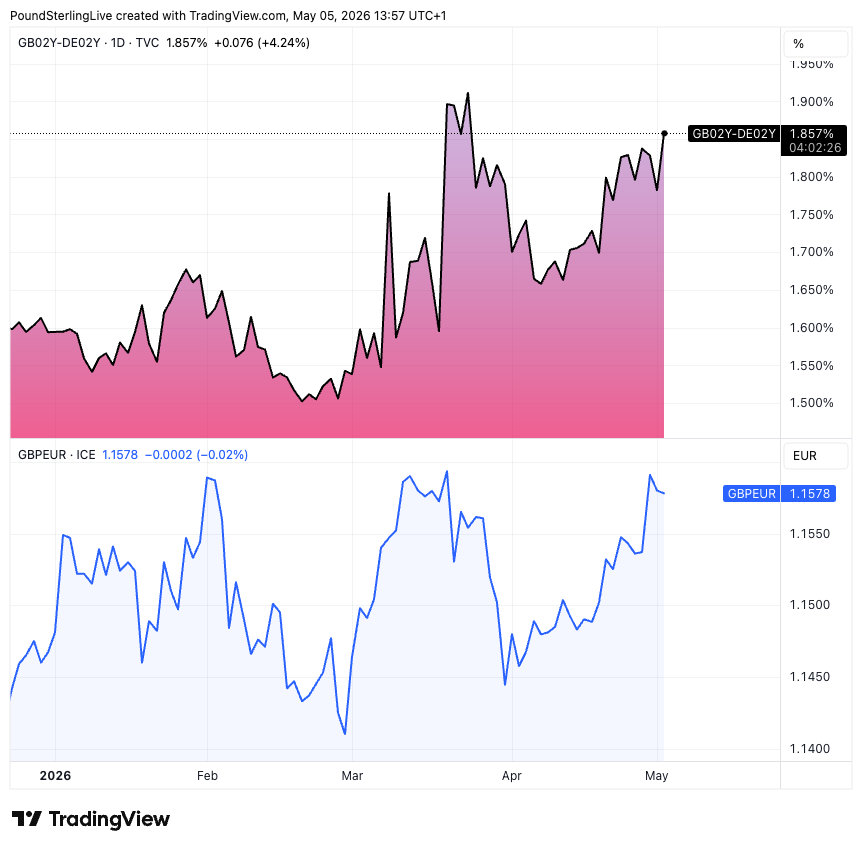
With UK yields rising at a faster rate than in the Eurozone, investors could continue to buy UK bonds and interest-rate-linked assets, which would boost the pound.
But for that to continue, they must be confident UK policy will remain stable. That stability will be tested later this week as Prime Minister Keir Starmer's Labour Party is expected to lose thousands of councillors in England and run in third in the Welsh and Scottish parliaments.
Rivals are said to be plotting a challenge for the top job, judging they have what it takes to turn the party's fortunes around.
Looking at the candidates, the replacement would initiate a leftward shift in policy that raises concerns about the country's debt sustainability, putting bonds and the pound under pressure.
Starmer could also respond by lurching leftwards to save his own skin in the coming weeks, and that means potentially ditching his Chancellor, Rachel Reeves, whom the markets trust.
"The PM’s political capital continues to drain away. The risk of left leaning challenger usurping Starmer, resulting in additional pressure in the long end of the Gilt curve, (10-year Gilt yields continue to oscillate around 5.00%), remains a likely drag on underlying Sterling sentiment," says Jeremy Stretch, Chief International Strategist at CIBC Capital Markets.
"We do not expect major retracements in fiscal risk premium anytime soon and therefore stay long EURGBP as the risk of a change in leadership and fiscal policy may persist until after the May local elections," says BNP Paribas. "While a lot of bearishness is already in the price, UK assets are still at risk of underperforming further until clarity on new policies is unveiled at the Autumn budget."
For GBP/EUR, the battle is between supportive yields and nervousness about the future of the PM. Note, it's only on the weekend that the full election results will be known, so we will likely see consolidation around 1.16 in the coming days.