
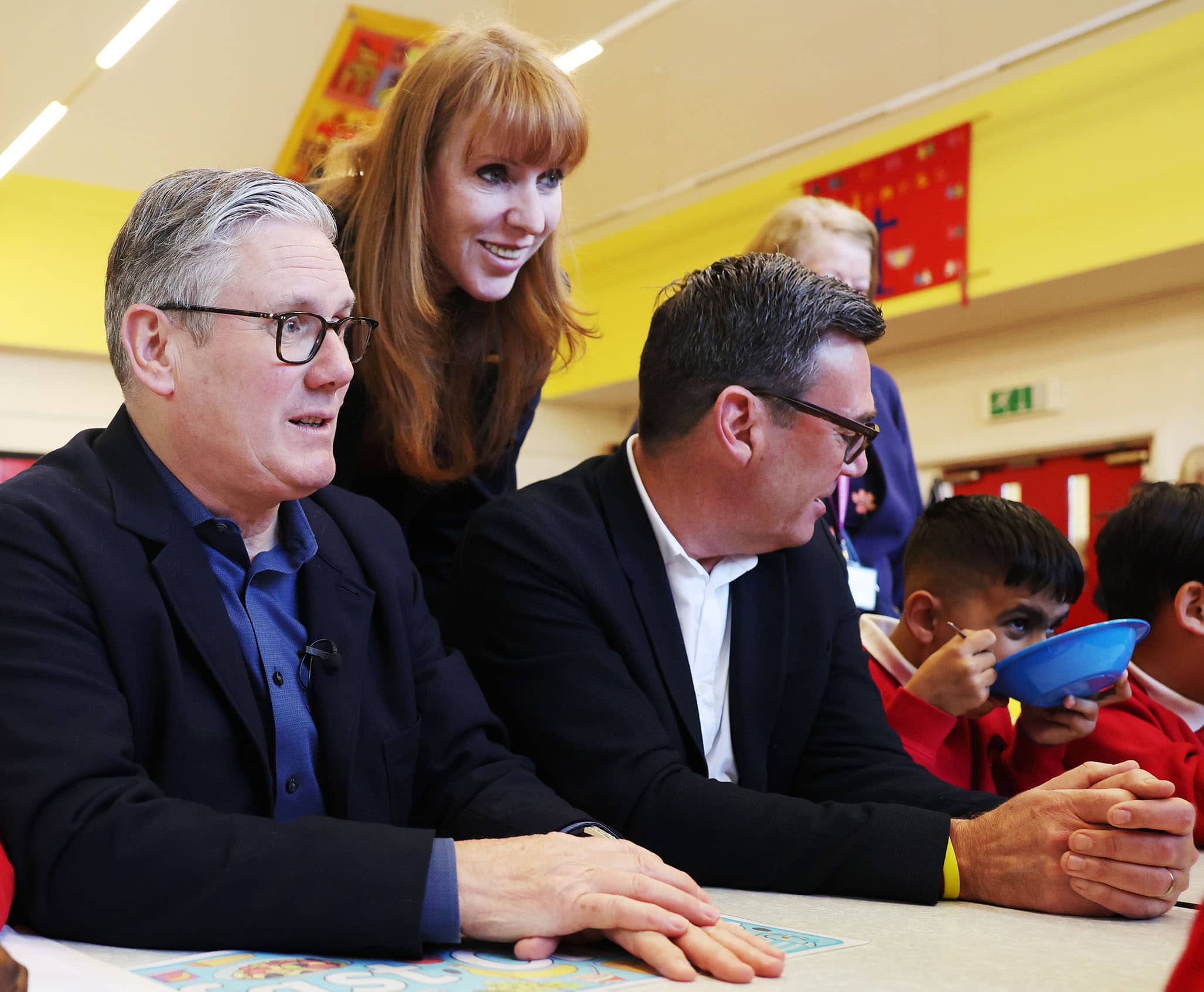
File image of Starmer and his two leading challengers, Angela Rayner and Andy Burnham. Picture taken on April 13, 2026, by Lauren Hurley / No 10 Downing Street.
Pound Sells Off as Burnham Comes for Starmer's Job. What Comes Next...
UK bonds and the pound are lower on Friday as investors price in risks of higher inflation and more borrowing as Andy Burnham makes his move to unseat the incumbent Prime Minister.
He will contest the Makerfield by-election, hope to win it, and then be anointed the next leader of the Labour Party. With the position comes the keys to Downing Street.
The Price Action Shows a Risk Readjustment
A sharp fall in the pound and bonds shows markets have adjusted to the greater odds of a Burnham leadership.
Bond yields - the effective interest rate of those bonds - rises as the bond's underlying price falls.
That rise in yield means the cost the government borrows at has risen in response to political developments. That puts upward pressure on things like mortgages and borrowing rates.
The two-year is up at 4.53%, the spread against its German equivalent rises to 1.833%. The ten-year is back above 5.0% and the 30-year is at 5.7%, putting it just below levels last seen in 1998.
That says markets are expecting higher UK inflation outcomes down the line, while also becoming increasingly anxious about Britain's debt dynamics.
"11bp jump on the 10-year Gilt at the market open to 5.11%. The dynamic of this Makerfield by-election will be Andy Burnham making Green Party-appeasing noises, the Gilt Market will see yields jump, Burnham will have to qualify his comments. Rinse. Repeat. For Six Weeks," says Simon French, Chief Economist at Panmure Liberum.
The Exchange Rate
Higher yields can help the pound. However, when the pound falls despite yields rising, it does signal that investors are nervous.
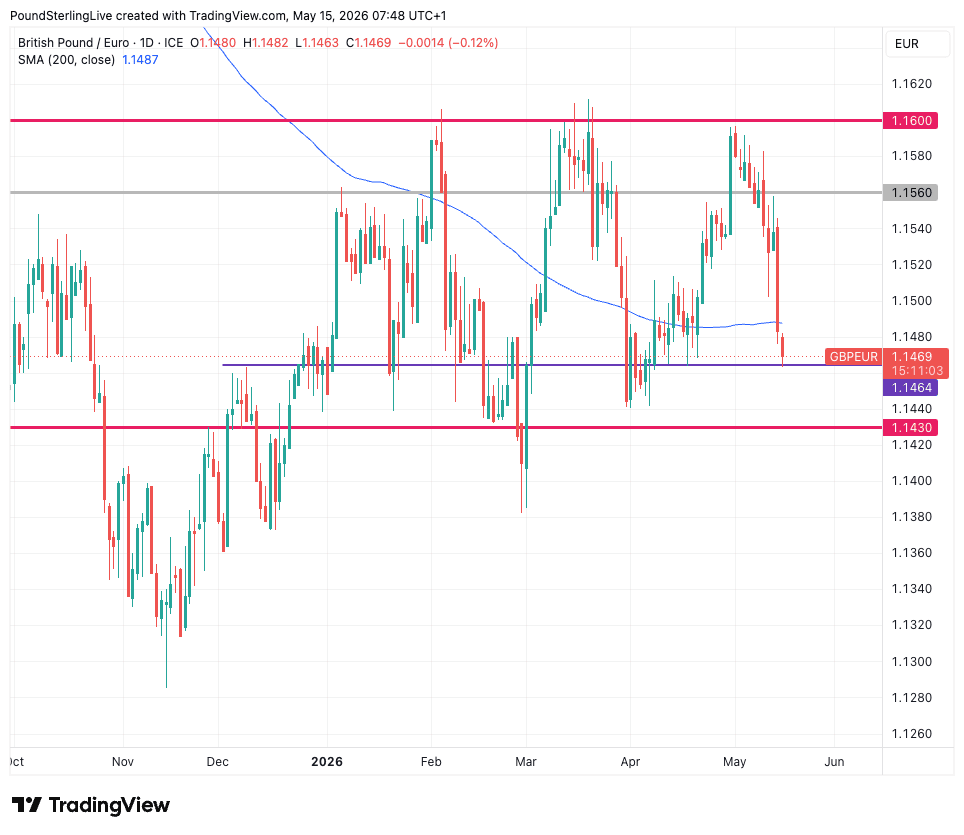
Pound to euro exchange rate: the week's low is at 1.1463, which is the approximate area of a pivot line that serves as support on the way down and resistance on the way up.
On the back of these developments, analysts at Societe Generale say GBP/EUR is gradually approaching the April low, which may act as the first support.
Our Take...
Is that Burnham's gamble looks hubristic, and the GBP sell-off should find a floor as the scale of his Reform challenge becomes clear. That should mean the pound will find some support now that the market has undergone a meaningful readjustment to price in additional political risk.
Burnham is contesting what is now considered a safe seat for the Reform Party: Nowcasting models based on polling data puts Reform well ahead in the seat at 45%.
Burnham reckons his unique charisma can shift the polls and attract ex-Labour voters back to the fold.
However, he must contend with a split Labour vote: some Labour voters will be angry with the ploy and will want Starmer to continue, thereby lending their vote to either Reform or the Greens.
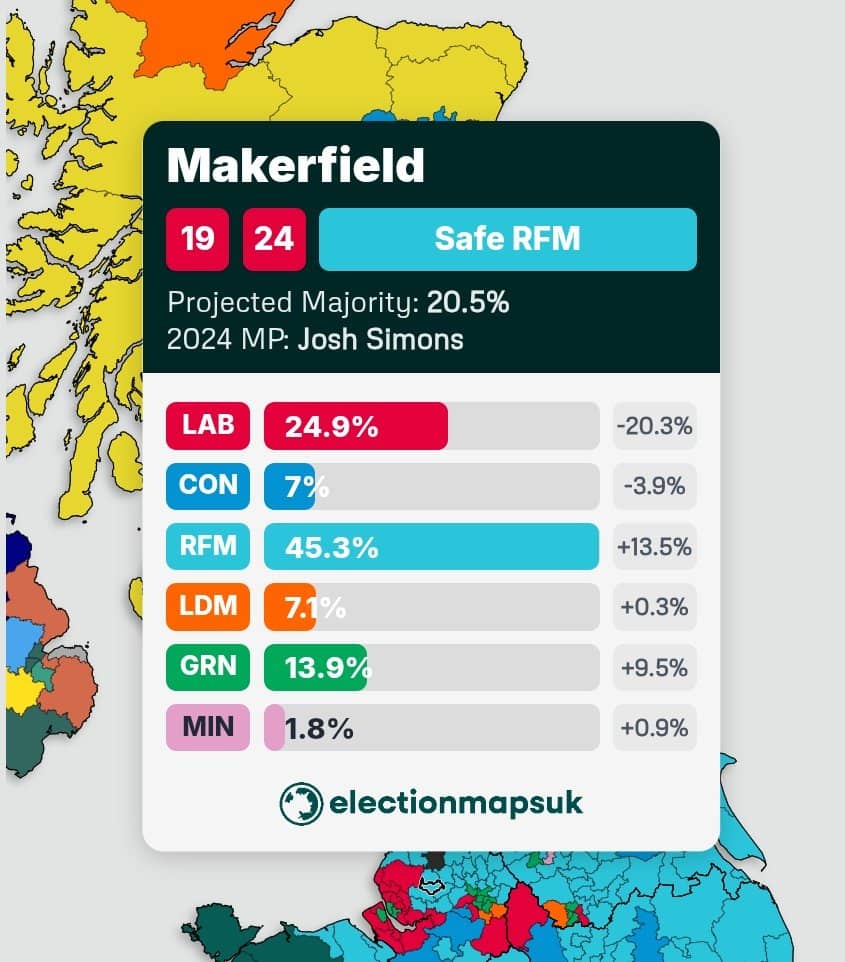
Image: Election Maps UK.
Goldman Sachs: Sterling Risks are Contained
The Wall Street investment bank says the political risk premium in Sterling has risen over the past week, "but remains at low levels compared to much of 2025."
Its currency strategists acknowledge that political uncertainty presents asymmetric downside risks to Sterling in the near-term but highlight that this is more likely to materialise as bouts of weakness rather than a sustained trend, similar to the pattern in 2025.
Commerzbank: More Weakness to Come
However, analysts we follow take a different view, saying there's more weakness to come.
Commerzbank's Michael Pfister says on Friday that the news and potential political uncertainty that is to come is "not yet fully reflected in market prices"; he expects lower GBP/EUR in the coming weeks.
"The situation is bad for the pound for two reasons. Firstly, political uncertainty rarely benefits a currency, and secondly, it is currently unclear what policies the potential successors intend to implement," he says.
Commerzbank continue to expect lower levels in pound-euro as a result.
Negatives in the Price
Valentin Marinov, chief strategist at Crédit Agricole, says some negatives seem to be in the price of the GBP by now, "so that the currency may consolidate in the absence of significant downside growth and upside inflation surprises."
Even so, he continues to advise caution on the GBP given the lingering political uncertainty ahead.