

Image © Adobe Images
An incredible stock bull run and the war in the Middle East have been supportive of the pound.
The pound to euro exchange rate (GBP/EUR) rose on Monday as foreign exchange markets tacked onto a rise in UK bond yields, a move linked to the latest developments in Iran where a breakdown in negotiations delivered a setback in efforts to reopen the Strait of Hormuz.
The typical rule of thumb is that deteriorations in geopolitical sentiment should weigh on sterling, but the data and financial market correlation analysis show this is not the case. In fact, the war in the Middle East has proven a supportive development for the pound relative to the euro, suggesting any further episodes of escalation could prove supportive and lift in the exchange rate back to 1.16:
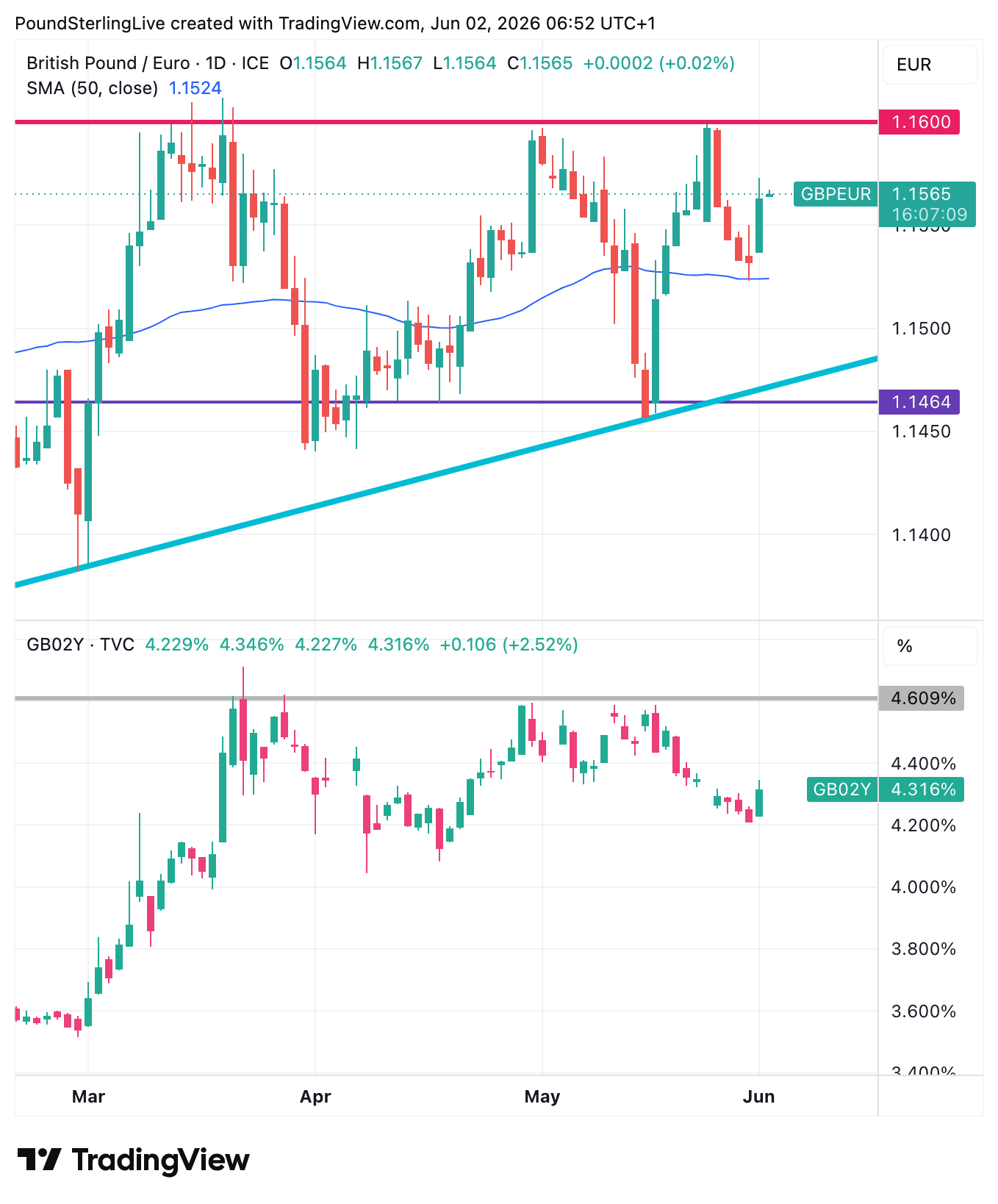
The chart shows that the pound-euro exchange rate rose at the start of the conflict in tandem with the two-year gilt yield, with subsequent peaks at 1.16, reflecting similar spikes in the yield.
The yield is important as it closely tracks what investors think the Bank of England will do to interest rates. In short, this is a market telling us that it sees rises in Bank Rate in the coming months as policy makers seek to get on top of the inflationary impact of the war.
"Developments in the Middle East, and especially their impact on energy prices, have been the main driver of government bond performance since the start of the US-Iran conflict in late February," says Francesco Maria Di Bella, FI Strategist at UniCredit in Milan.
The pound rose against the euro on Monday after weekend news of renewed escalation in the Middle East, which was topped off by Iran's announcement it was ceasing communications with the U.S. due to Israel's latest offensive in Lebanon. Oil prices rose in response, gilt yields followed suit and GBP/EUR recorded a 0.27% daily gain to close at 1.1563.
However, the advance hasn't been built on in the Tuesday session as oil prices consolidate on further developments, namely that Trump will contain Israel to ensure a deal with Iran crosses the line.
He stated that discussions with Iran continue while efforts to limit tensions in Lebanon remain ongoing, despite prior reports suggesting Tehran had suspended indirect negotiations with Washington.
The Important Context: The Stock Bull Run Supports Pound Sterling
But, it's worth noting the broader background conditions are relevant when considering the pound's performance: stocks are well supported and we're in fact witnessing an incredible bull market as the AI trade tears ahead.
This cyclical bull is 45 months old, surging over 80% and logging more than 200 new all-time highs.
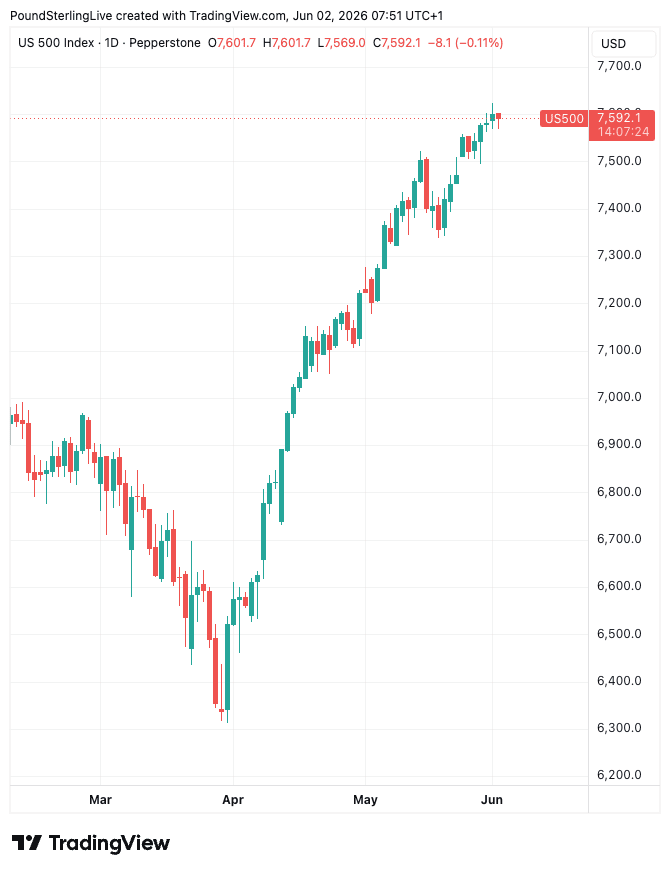
We're clearly in a 'risk on' phase, despite what's going on in the Middle East. The combination of supportive risk and higher yields is therefore proving a supportive combination for the GBP/EUR. In fact, the rise in UK yields would potentially not carry sterling higher without the global backdrop being constructive.
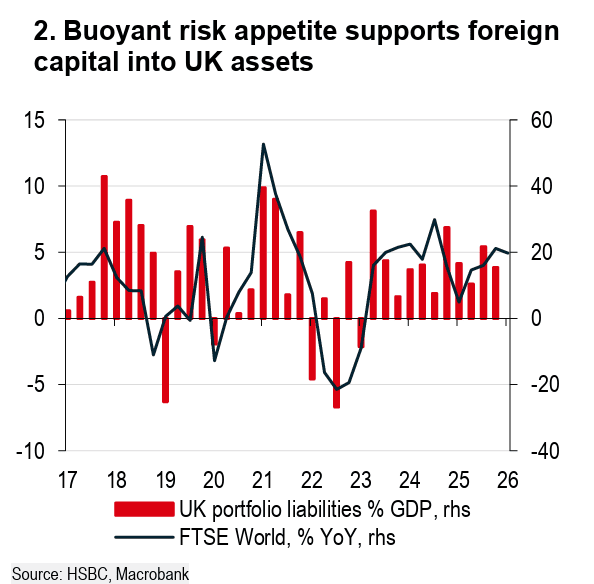
Risks to the pound therefore are a flip in the supportive drivers identified, namely a setback to the AI-diffusion bull run and a sharp fall in inflation expectations that would weigh on UK gilt yields, most likely linked to a decisive end to the Iran conflict and the reopening of the Strait of Hormuz.
"Investors have been remarkably willing to look through the setbacks," says Nigel Green, CEO of deVere Group. "Every time tensions increased, the prevailing view was that diplomacy would eventually catch up. At some stage markets stop giving negotiations the benefit of the doubt."