
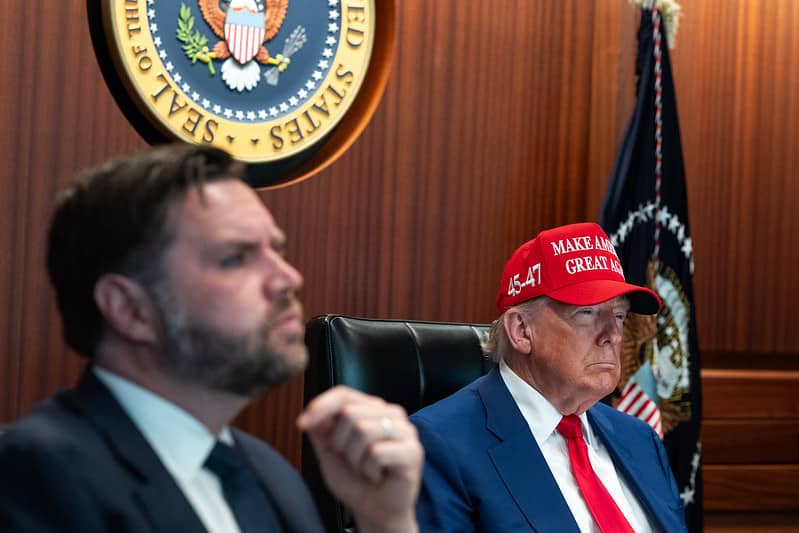
Official White House Photo by Daniel Torok.
Pound sterling will be watching Iran peace deal developments, the Bank of England and the Makerfield by-election.
It's therefore a packed week ahead for the pound to euro exchange rate (GBP/EUR), and already we've seen some nervy behaviour during Asian trade, with the pair bobbing between a high of 1.1594 and a low of 1.1554.
That initial volatility is likely a response to the assertion by U.S. President Donald Trump that a deal with Iran was "now complete", which was confirmed by Iran’s deputy foreign minister, Kazem Gharibabadi.
The signing of the deal is expected in Switzerland on Friday.
In response, oil prices dropped in Monday trade to their lowest levels since the even of the war at $83.64.
For the pound, that fall in oil prices is important as it will lower inflationary risks and limit the odds that the Bank of England raises interest rates at any point in the coming year.
That's good news for households and businesses but it should weigh on short-term UK bond yields, which could in turn weigh on the pound.
The GBP has, surprisingly, proven to be the third-best performing G10 currency during the Iran crisis owing to that interplay between inflation expectations and interest rates, and the end of the war could mean some of that outperformance is quickly handed back.
It's why the good news of peace could spell downside for the pound.
Technically, Still Constructive
Last week saw GBP/EUR strengthen and test the 1.16 technical barrier before pulling back, but the resultant weakness has been too shallow to suggest a deeper reset is underway.
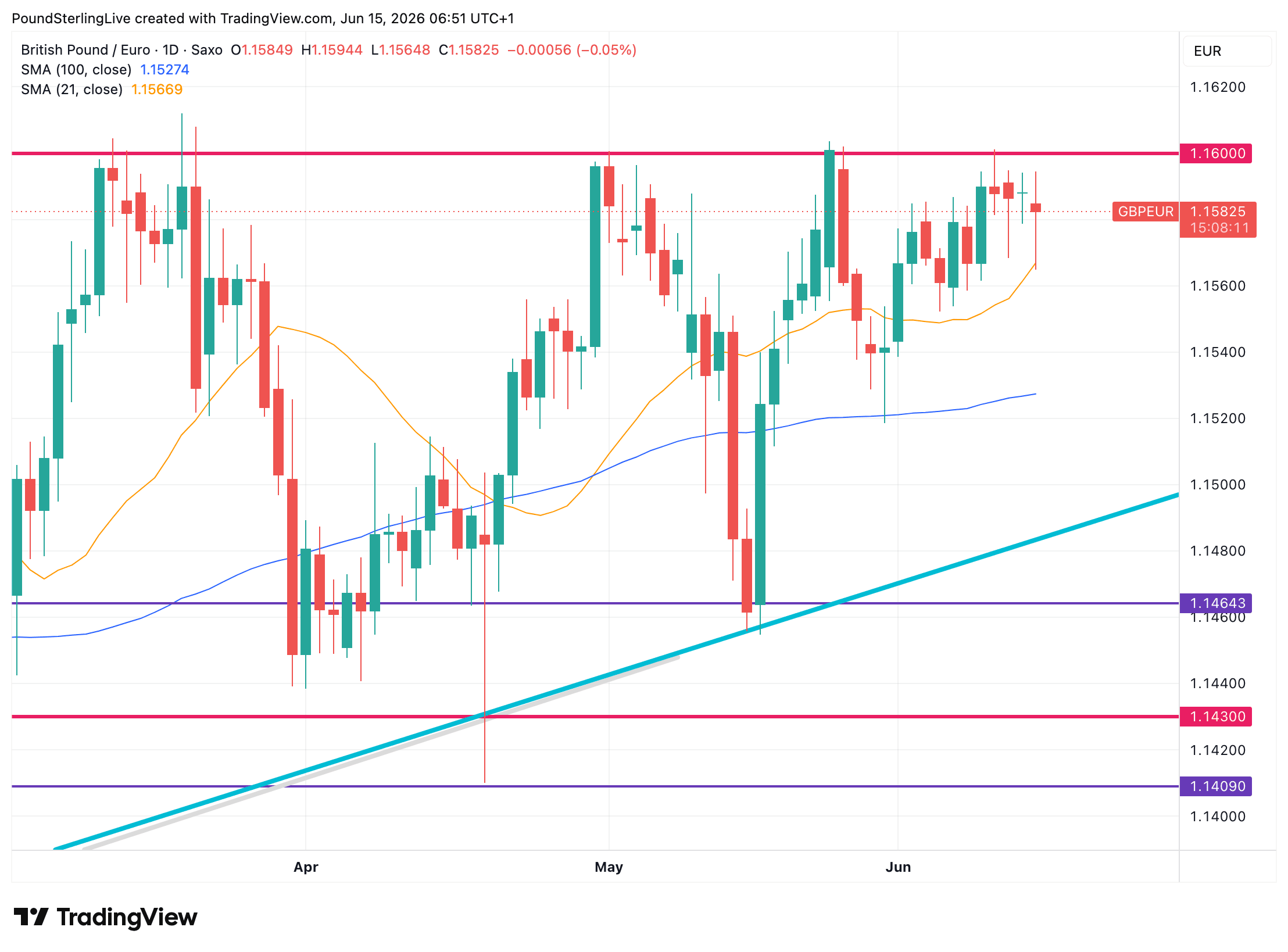
On Monday, in response to the Iran news, the pair dipped to test the 21-day moving average at 1.1566, but buyers stepped in to defend the decline. While above this level, the technical setup remains constructive and we would anticipate a retest of 1.16 and perhaps higher.
However, a break below the 21-day would be the first signal that a deeper pullback into the year-long range is underway, something we'd be wary of given the global events that will be dominating market discourse this week.
If the 21-day does yield amidst pound sterling weakness, then a decline to the 100-day moving average at 1.1527 would be favoured on a short-term timeframe.
Bank of England a Dovish Risk to Sterling
A key downside risk for the coming week is the Bank of England decision, due Thursday, where the events in the Middle East could well prompt a dovish message, i.e. one that steers the market away from anticipating a hike later in the year.
The Bank has set out a number of scenarios for inflation in the coming months, depending on how the geopolitical situation evolves and how elevated oil prices stay. An imminent reopening of the Strait of Hormuz due to a peace deal would mean a less-severe path for UK inflation and the Bank can therefore argue against a rate hike.
On balance, this means Thursday's decision and guidance could prompt GBP downside.
Inflation, Wage Data to Add Flavour
Before the Bank delivers its verdict, the ONS will release inflation and labour market data, two important inputs into the Bank of England's decision-making.
Inflation is due for release Wednesday, and the consensus expects a figure of 3.0% y/y in May, up from 2.8% previously. Core is forecast at 2.7%, up from 2.5% previously.
Anything less and the odds of a bearish Bank of England guidance increase further, which would put sterling under pressure in the midweek session.
Thursday's labour market data will meanwhile be watched for signs of increasing unemployment, a trend that has been increasingly apparent in the economic data pulse and a reason why the Bank thinks lower interest rates are needed.
The unemployment rate is expected to remain at 5.0%, while average earnings are forecast to have fallen further to 4.0% in April.
Burnham Makerfield Win Not A Major Concern for GBP
The other big event to watch in the coming days is the Makerfield by-election, which Labour's Andy Burnham should comfortably win owing to a solid anti-Reform vote on both the left and right (Restore will likely splinter the right-wing vote, denying Reform's candidate the win).
Burnham will reportedly move quickly to overthrow the current Prime Minister and install himself with the help of a willing Labour Party that believes a change in personnel will shift their fortunes in the polls.
There has been some talk about Makerfield being a risk to pound sterling owing to Burnham's left-leaning credentials and his arguments that spending should be increased to fund social housing and defence.
However, as we've said here, the so-called King of the North also has a penchant for U-turns, and for the pound and UK assets, that's a good thing because he's effectively committed to respecting the UK's fiscal rules.
Because he's u-turned on his most risky stances during the Makerfield campaign, there's little likelihood of a negative market reaction to news of his win on Friday morning.