
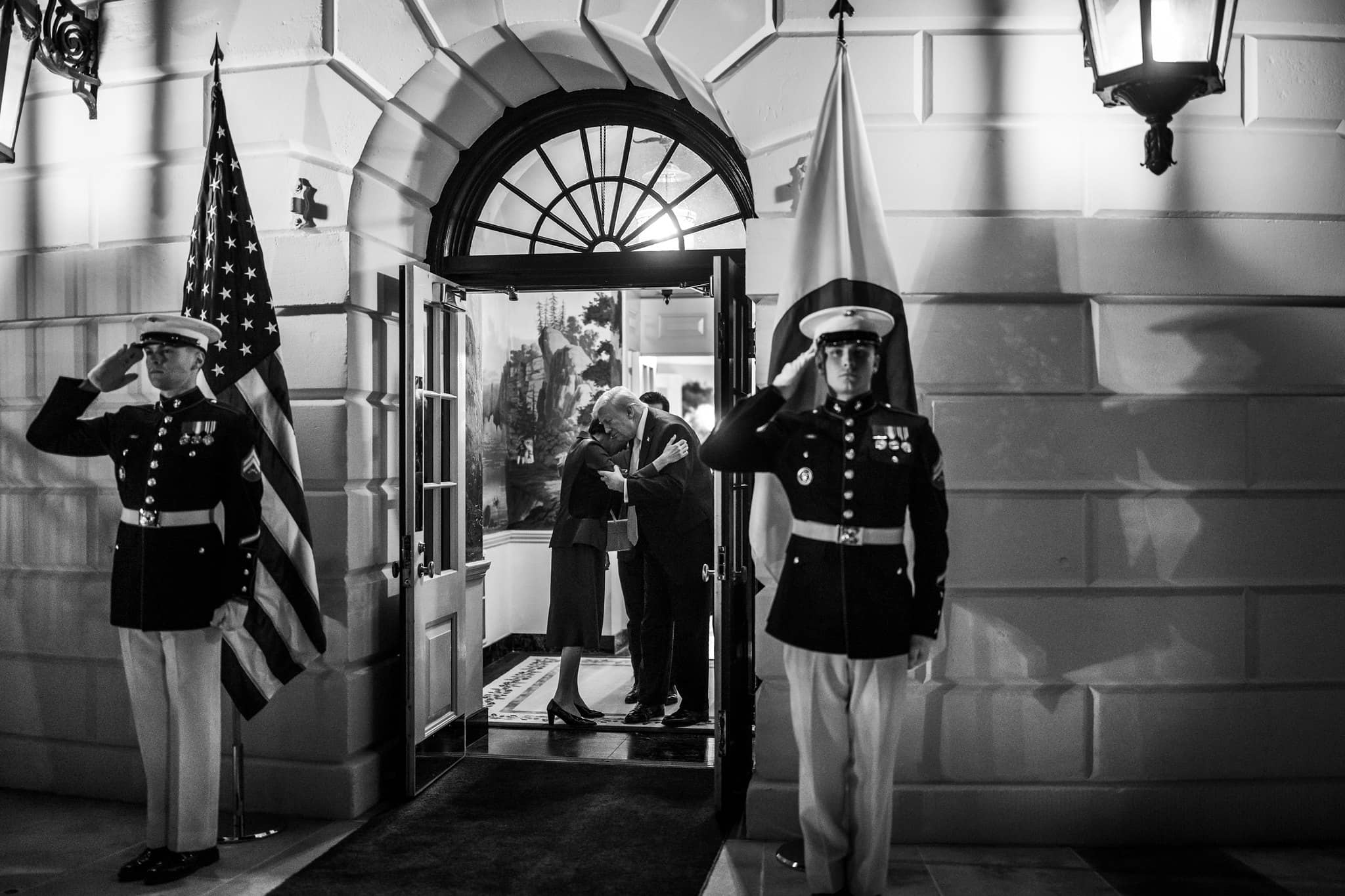
Image: White House Official.
U.S. President Donald Trump used an address to Americans overnight to signal operations in the Middle East would last for about 2-3 more weeks.
The news was a clear sign that recent hopes for an imminent end to the war were premature; oil rose and the pound fell back against the dollar and euro, having staged a small recovery through the midweek session.
In an address delivered at the White House, Trump said the U.S. will hit Iran "extremely hard" over the coming weeks. He added that the U.S. would complete its military objectives "very shortly."
"If last night’s speech was meant to sway the electorate or calm markets, it did not work. Now, we wait to see if ground troops are deployed on the weekend. For now, we have another “sell and hedge and short into the weekend” trade with yet another bounce on Monday if nothing horrible happens over Easter," says Brent Donnelly, a strategist at Spectra Markets.
The pound had rallied against the dollar and euro through Wednesday, responding to an uplift in global investor sentiment on hopes the war was nearing completion. But the speech disappointed those hopes and reminded us that the reality is this is war and Trump might have little option but to escalate.
For sterling, this is bearish, and those with imminent money transfers should benchmark their bank's rate against industry specialists to ensure they maximise the amount of currency they receive: for GBP/EUR you can check here and GBP/USD here.
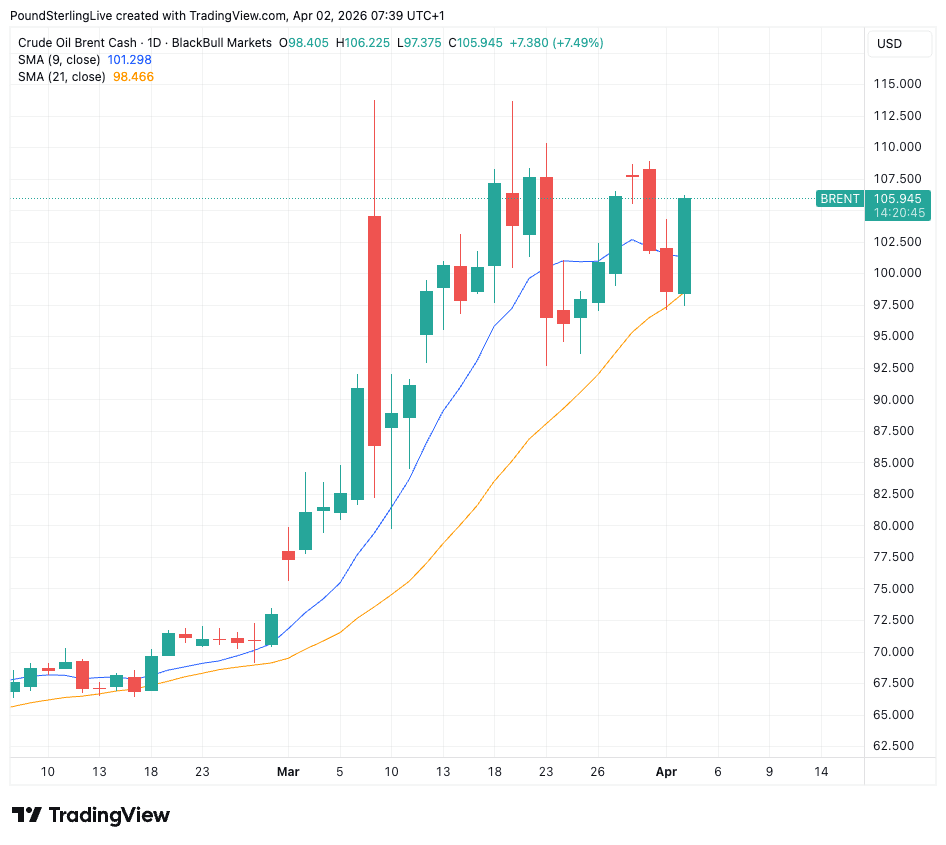
Above: Brent crude is still elevated, providing a supportive backdrop for USD.
Trump's address showed he wants Iran to make real concessions, which have yet to be forthcoming. Indeed, the country fired a salvo of missiles in response to the speech and regime military leaders repeated their tough-sounding rhetoric.
It was always clear that the U.S. simply walking away would mark a significant strategic failure; for instance, key Gulf allies Saudi Arabia and the UAE would be left to deal with Iran's chokehold on the Gulf of Hormuz.
"In his highly anticipated speech on the war in Iran, US President Donald Trump offered little new information," says Michael Pfister, FX Analyst at Commerzbank.
The pound-euro exchange rate rose during March as the war progressed, but has since pulled back from highs near 1.16 on fears the war will damage the domestic economy and destabilise already-high public finances. The volatility is proving unsettling for those with transfer needs and we recommend talking to a specialist dealer to help navigate the coming days and consider available strategies and tools to protect budgets.
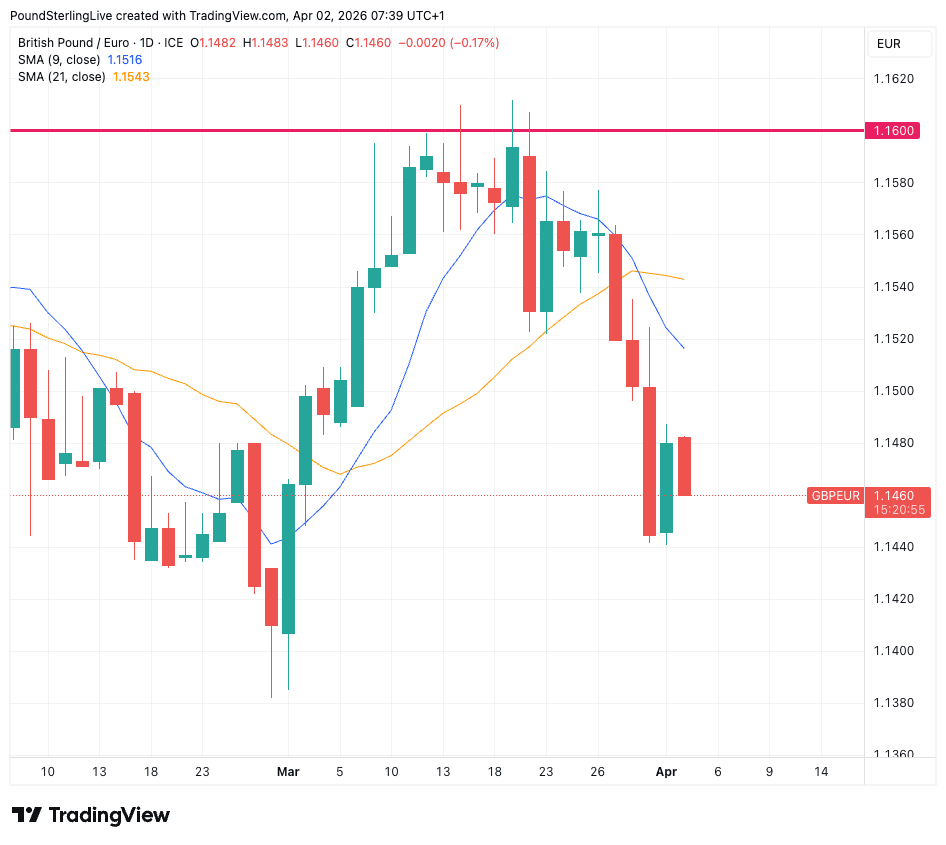
Above: GBP/EUR has come under pressure and could threaten 1.14 next.
In the short-term, we'll be watching how the all-important bond markets respond to fears of three more weeks of hostilities; any renewed selloff would likely weigh heavily on GBP/EUR and see it press fresh lows.
Early in the war, the rise in UK bond yields - a result of falling bond prices - helped GBP/EUR, but when that move is unusually large, it tends to weigh on the exchange rate.
The pound-dollar is meanwhile an easier customer in these headline-driven times, rising on Wednesday when de-escalation hopes were evident, and reversing sharply in the wake of Trump's speech.
Here, a clear downtrend remains firmly intact.
"We are of the view that a few months out, whether via near-term escalation or immediate de-escalation, tensions in the Middle-East are likely to decline. At that point the dollar could weaken more broadly," says a weekly analysis note from Barclays.
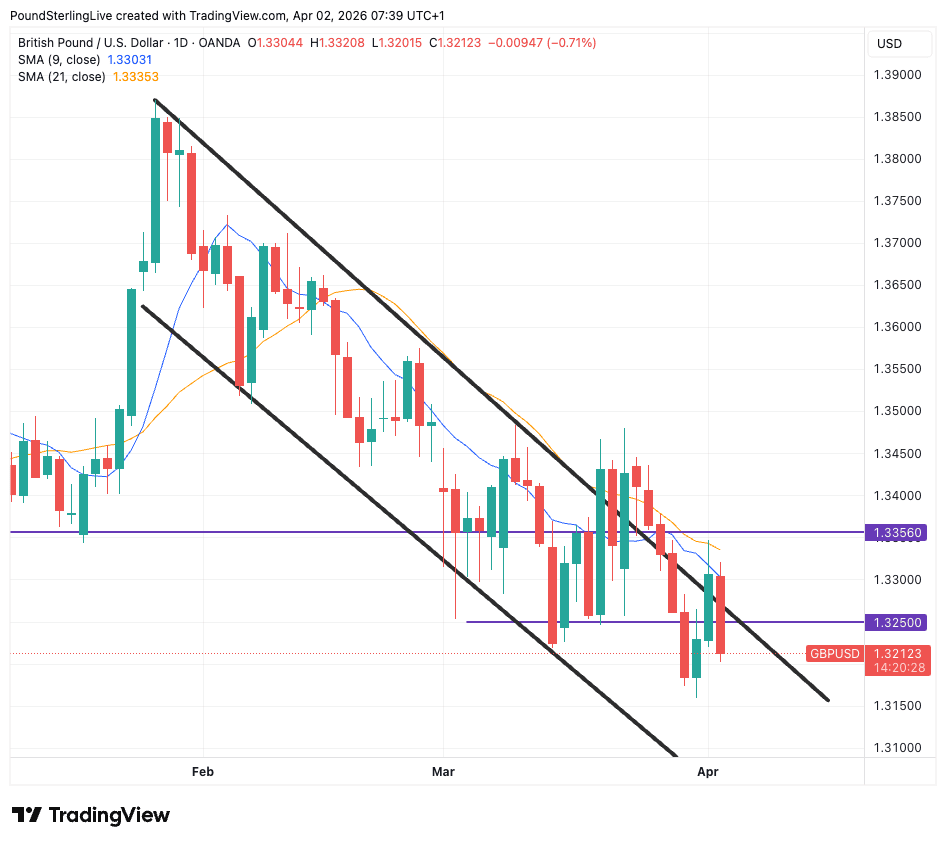
Above: GBP/USD downside still engaged.
Payment Strategy Implications
What This Means If You Have a Payment to Make
Sending euros (GBP/EUR): The rate climbed steadily through March as the war developed, but has since given back most of those gains and technical indicators point to a growing downtrend movement. Trump's confirmation of three more weeks of hostilities adds further complexity; the immediate watch is UK bond markets, where a fresh selloff would likely push GBP/EUR to new lows. In this environment, waiting for clarity carries its own risk. A specialist dealer can help you assess whether to act now or set a defensive order.
Sending dollars (GBP/USD): The trend here is clearer – downward – with brief headline-driven recoveries that have consistently been sold into. Wednesday's rally on ceasefire hopes was erased overnight. Barclays note the dollar should weaken more broadly once the conflict resolves, but that is a months-out view; the near-term path remains volatile. Those with dollar payments who can afford to wait may find the rate improves, but those with fixed deadlines should consider securing today's rate or setting a target order to avoid further slippage.
Receiving pounds into GBP: The same volatility that hurts those sending currency can work in your favour, a further dollar or euro rally would improve your inbound rate. A dealer can help you structure a strategy that captures upside while protecting against a reversal.