

Image © Adobe Images
The pound needs to cross a key resistance level in order to establish a clear uptrend.
Pound sterling recorded its biggest weekly gain against the U.S. dollar last week, opening the door to potential further gains into year-end.
The pound to dollar exchange rate (GBP/USD) starts December at 1.3218, helped by a combination of domestic relief owing to the passing of last week's budget and rising bets for a Federal Reserve interest rate cut on Dec. 17.
"The GBP could benefit, as its c.2% fiscal risk premium unwinds further," says a weekly FX analysis from Barclays.
There are reports that last week's £26.1BN tax raid will rebuild some £22BN in UK fiscal headroom, reassuring investors in UK government bonds that Britain's money is safe.
"We feel comfortable to come back to the UK market and add gilt exposure," said Ales Koutny, head of international rates at Vanguard.
Vanguard is the world's second-largest asset manager, and a commitment to buying more UK bonds will be reflected by peers.
Dominic Bunning, FX strategist at Nomura, said the budget "avoided the major tail risks that could have hurt GBP" because the government increased its fiscal headroom while sidestepping any near-term tightening that would have weighed on growth.
The pound's recovery against the dollar will now take its lead from what happens in the U.S., where expectations for a December rate cut have started to increase of late.
That mid-month decision will be influenced heavily by this week's U.S. data dump.
We're watching:
- Monday: ISM manufacturing PMI survey (consensus: 49K)
- Wednesday: ADP employment change (consensus: 10K).
Industrial production (consensus 0.1%)
Manufacturing production (consensus 0.1%)
ISM services PMI survey (consensus 52) - Thursday: Initial jobless claims (consensus 222K)
- Friday: Core PCE price index y/y (consensus: 2.8%)
PCE price index (2.8%).
Expect intraday volatility on these data releases. But by the end of the week we should get a sense as to whether we're leaning more heavily into a mid-month cut.
If we are, pound-dollar can rally further, but diminished odds will weigh heavily.
Looking at the charts, we're at a key moment. GBP/USD has risen up to meet resistance at the 50-day exponential moving average (EMA) at 1.3254, but has thus far failed to move above it:
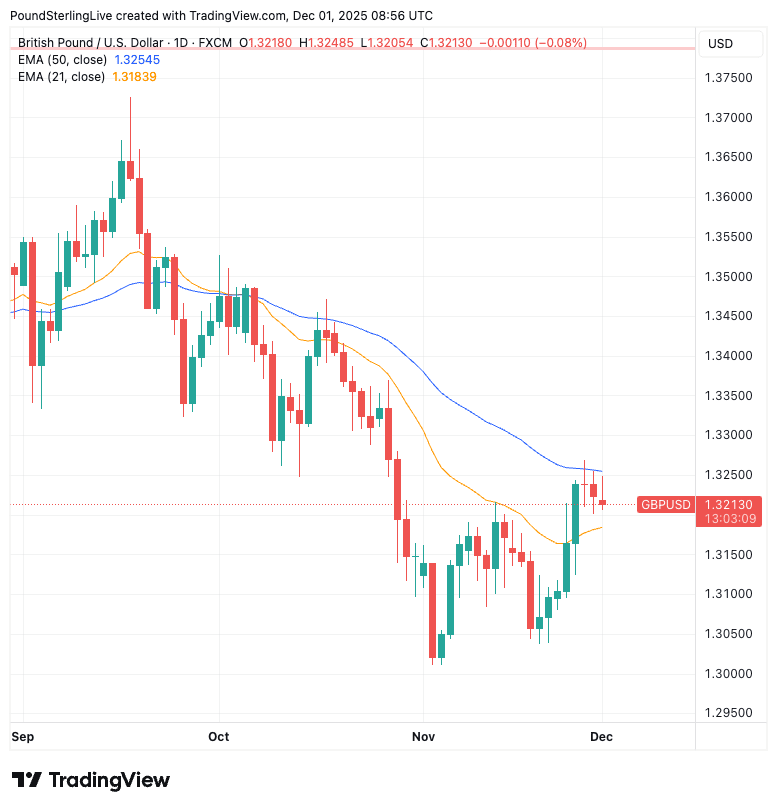
For the market to enter a more concerted uptrend, the pair should move above here, in doing so a test of 1.35 becomes likely in early 2026.
The pair has nevertheless moved above the 21-day EMA which is consistent with a more bullish setup that reflects the recent boost in odds of a December interest rate cut at the Fed.
Look for trade between the two EMAs (1.3180-1.3465) ahead of any significant data surprises in this week's data.