
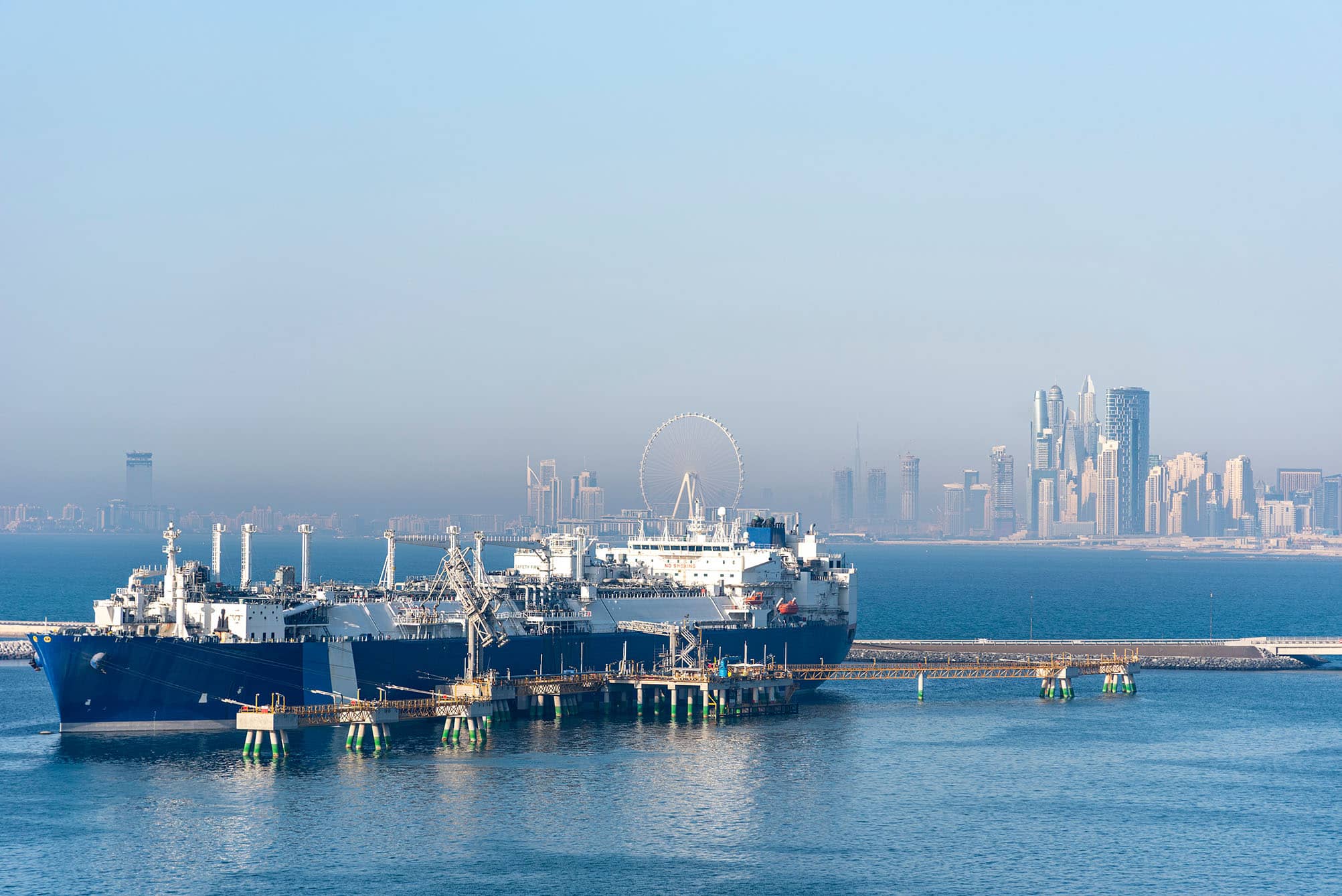
Natural gas carrier off Dubai. Image © Adobe Images
The Iran war is "backfiring" on the U.S. dollar says a new analysis from Handelsbanken, which warns the currency could struggle to perform its traditional safe haven function.
In a note to clients dated 9 April, Tommy von Brömsen, macro strategist at the Swedish bank, says "the dollar's role as a safe haven could be eroded at the margin" as the geopolitical conflict increasingly turns against US interests.
The warning comes as the USD loses ground against its peers, even as it becomes clear that the ceasefire agreed on Tuesday is at best flimsy.
Although oil prices have recovered from post-ceasefire announcement lows, the dollar hasn't, which is a potential signal of underlying dollar demand.
"Wile the market has not necessarily viewed the US as a clear 'winner' of the war, it has not viewed it as a clear 'loser' either. This, however, may be starting to change. As the downside risks to the US become more visible and tangible, the dollar's role as a safe haven could be eroded at the margin," says von Brömsen.
- U.S. President Donald Trump last week told Iran to "open the Strait you crazing f***ing b******s" or face "annihilation".
- Trump backed off and cancelled all bombing ahead of his self-imposed Tuesday deadline, and yet the Strait of Hormuz still remains closed. Trump blinked; Iran didn't.
- "Tuesday's ceasefire provided a useful market signal by underscoring the Trump administration's desire to find an exit ramp, but so far it appears worth little more than the paper it was written on," says Karl Schamotta, analyst at Corpay.
- Facing significant resistance to his war back home, Trump looks set to exit the Middle East and leave it in a bigger mess than when he entered.
- For markets, it means restricted shipping and elevated baseline energy prices, but not enough to trigger a global recession.
- That quasi-inflationary backdrop means higher central bank interest rates than in the counterfactual.
Despite a temporary truce announcement, "strains in relations with key allies, limited international support, and rising domestic political divisions all point in that direction," von Brömsen says, describing forces that could structurally weaken the dollar's defensive appeal.
To be sure, a sizeable 'long' dollar position has been built up during the war, meaning there are some structural constraints holding the dollar back.
But Handelsbanken's concern is that systemic issues are holding it back.
"Uncertainty around the strategic objectives and endgame of the conflict risks undermining policy credibility," von Brömsen says, adding that in risk-off episodes, "negative spillovers to the US itself could limit the upside in the dollar."
That marks a potential break from the dollar's established crisis behaviour, where global stress typically drives capital into US assets.
Energy markets are amplifying the pressure.
Traffic through the Strait of Hormuz has yet to normalise: data shows only ten ships passed through on 9 April, fewer than during the most intense days of the conflict, even after the ceasefire announcement.
And, none of them were energy carriers.
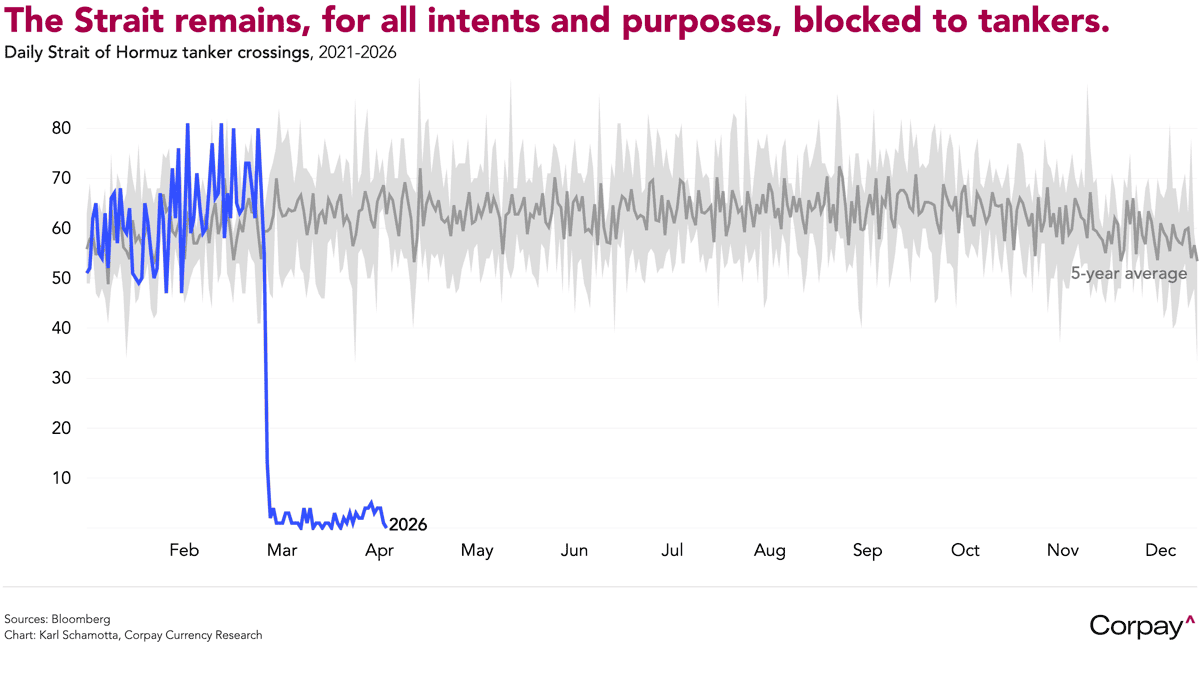
Oil prices are edging higher again as a result, with interest rates rising modestly alongside them.
The Norwegian krone is among the beneficiaries, gaining on the renewed rise in oil; elsewhere in FX markets, moves have been relatively contained.
"Correlations between the dollar and other asset classes: currencies, yields and equities, are a key building block of global return dynamics," von Brömsen says, warning that any shift in the dollar's safe haven status "would matter well beyond FX."
Handelsbanken stops short of a definitive call: "it is still too early to draw firm conclusions about the dollar's role," the bank says, though it flags that "if the war increasingly backfires on the US, the dollar may not behave like a clean safe haven going forward."
That caveat carries its own signal for markets watching the next swing in ceasefire negotiations.
Emily Peck at Axios says on Friday that the energy shock from the Iran war may drive long-lasting change in how the global multitrillion-dollar oil market operates.
It pivots from an open and smoothly functioning system into something weaponised and fractured: Such a reordering would mean, at a minimum, higher energy prices and inflation.
"In the long term, it could shake the foundations of the dollar-based global economy and, with it, U.S. power," says Peck.