
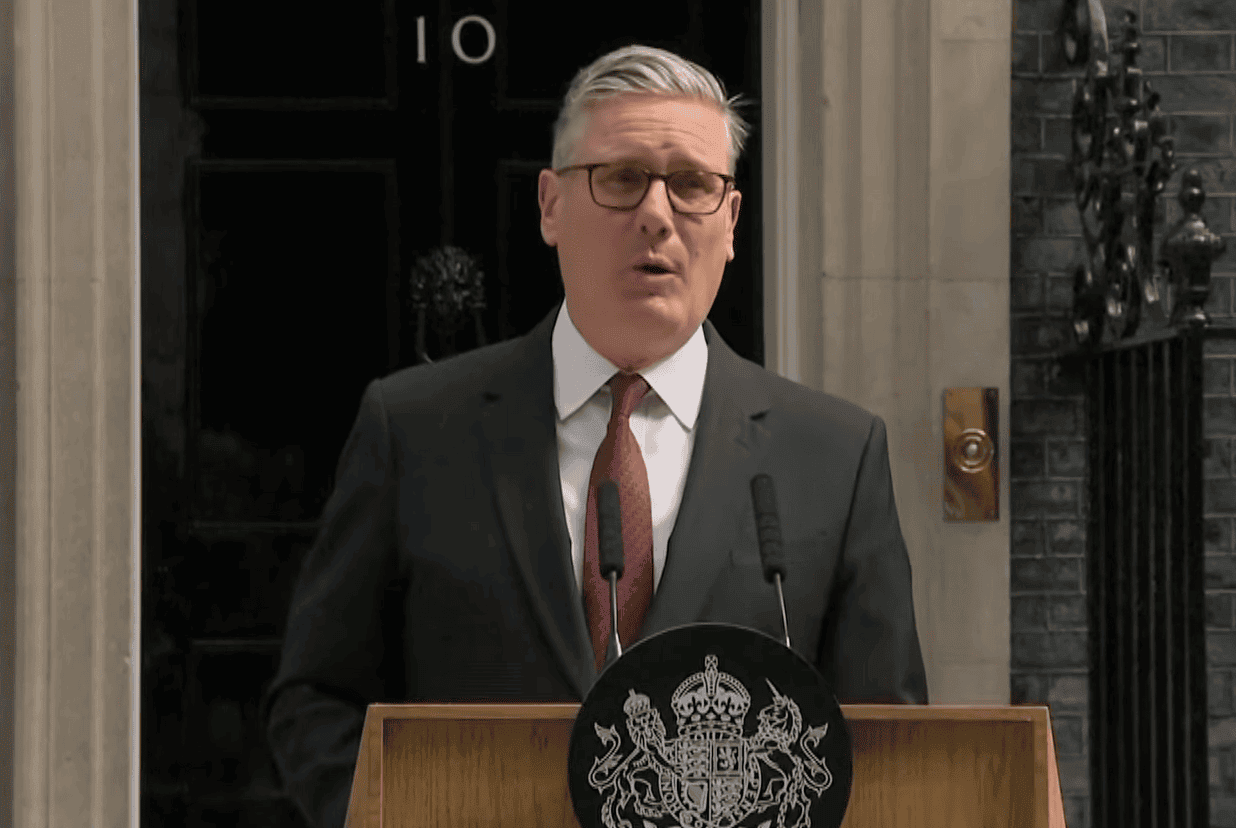
Still of Starmer's resignation speech.
How the Prime Minister's exit could impact the pound.
The pound hit its lowest level against the euro since mid-May on Monday morning as the market prepares for another week of uncertainty in British politics, with Prime Minister Keir Starmer resigning his post.
Outside Number 10 Downing Street, Starmer said, "I accept... with good grace" the need to step aside. "I will resign as leader of the Labour Party."
A timetable was laid out: by the 9th of July the process of choosing his replacement will have begun, to be completed by summer recess.
He said the new leader will be in place before Parliament returns in September. "I will remain in place as Prime Minister until the process is complete."
It is clear that Andy Burnham will command the support of enough parliamentarians to replace him as leader of the Labour Party, allowing the ex-mayor of Manchester to inherit the country.
Reports say Burnham expects to be installed, unchallenged by rivals, ensuring he avoids any meaningful scrutiny. For markets, that means an ambiguous policy outlook and weeks of uncertainty.
"MP backing Andy Burnham tells the Today programme there is no need for him to set out his plans for governing, or face a vote, before becoming PM because 'it's clear he's a very successful politician'," says Huyo Gye, a reporter for The Economist.
The pound dislikes uncertainty and should trade with a heavy tone as a result. The pound-to-euro rate dropped to 1.1507 on Monday morning before recovering to 1.1527, the pound-to-dollar trades at 1.3216, putting it just above last Friday's multi-week low at 1.3160.
"GBP/USD will remain under pressure this week because of elevated political uncertainty, which is also creating uncertainty around fiscal policy," says Samara Hammoud, a strategist at Commonwealth Bank.
Sterling Cool for Now
Starmer had little choice but to resign as reports suggest he faced the prospect of ministers resigning on Tuesday before the weekly cabinet meeting.
"Sterling keeps its cool for now," says a daily note from KBC Bank. "Political and budgetary uncertainty could nevertheless keep UK assets under pressure."
The Times reports that allies of Burnham believe a "messy" and expensive leadership challenge is not needed, because he has overwhelming support. It also says he "is yet to flesh out a policy platform" and that he doesn't know who his top team will be.
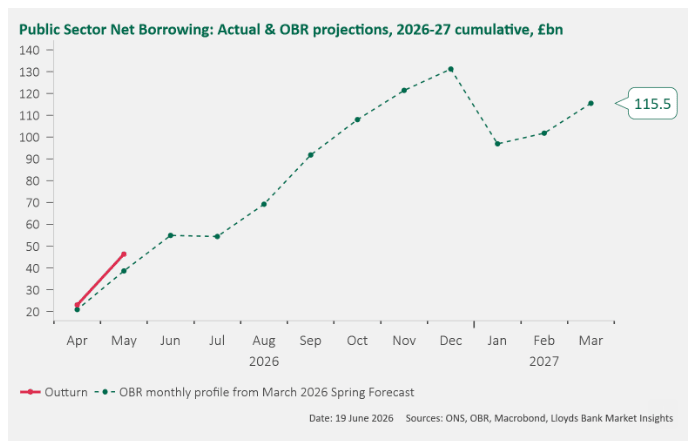
The new Prime Minister inherits a government that's already borrowed more than was expected for this point in the new fiscal year.
Summer of Uncertainty
A major question for markets will be who becomes the Chancellor of the Exchequer, the most important appointment Burnham will make.
It's widely accepted current incumbent Rachel Reeves can't continue in the role and there's talk about appointing Ed Miliband, the net-zero evangelist, who many say would amount to an anti-business and anti-growth pick, with even the Unions saying net-zero policies need a rethink.
A summer of uncertainty therefore awaits British businesses and households, which should be reflected in GBP underperformance.
All signs point to the summer of 2026 being a throwback to 2024, when Starmer's first summer in charge was characterised by uncertainty as his first play was to prepare the country for significant tax hikes in his first budget.
The fear and uncertainty at the time stalled the economy and there's the risk that another leadership cycle does the same.
Constrained Fiscal Realities
Last week saw Burnham win the Makerfield by-election with a much bigger majority than expected, giving him the momentum to challenge Starmer while giving any potential challengers reason to reflect on the wisdom of standing against him.
Once Burnham is installed, the better outcome for the pound would be that he governs along a similar fiscal trajectory to which he inherited, i.e. follows the contours of the previous budget and respects the fiscal rules that mean debt as a percentage of GDP must be falling in the next three to four years.
However, he has arrived on the doorstep of Downing Street by advocating a more radical agenda of widespread quasi-renationalisation of key services and more social investment.
In last year's New Statesman interview, he said the government should borrow more to invest and that the government had "got to get beyond this thing of being in hock to the bond markets."
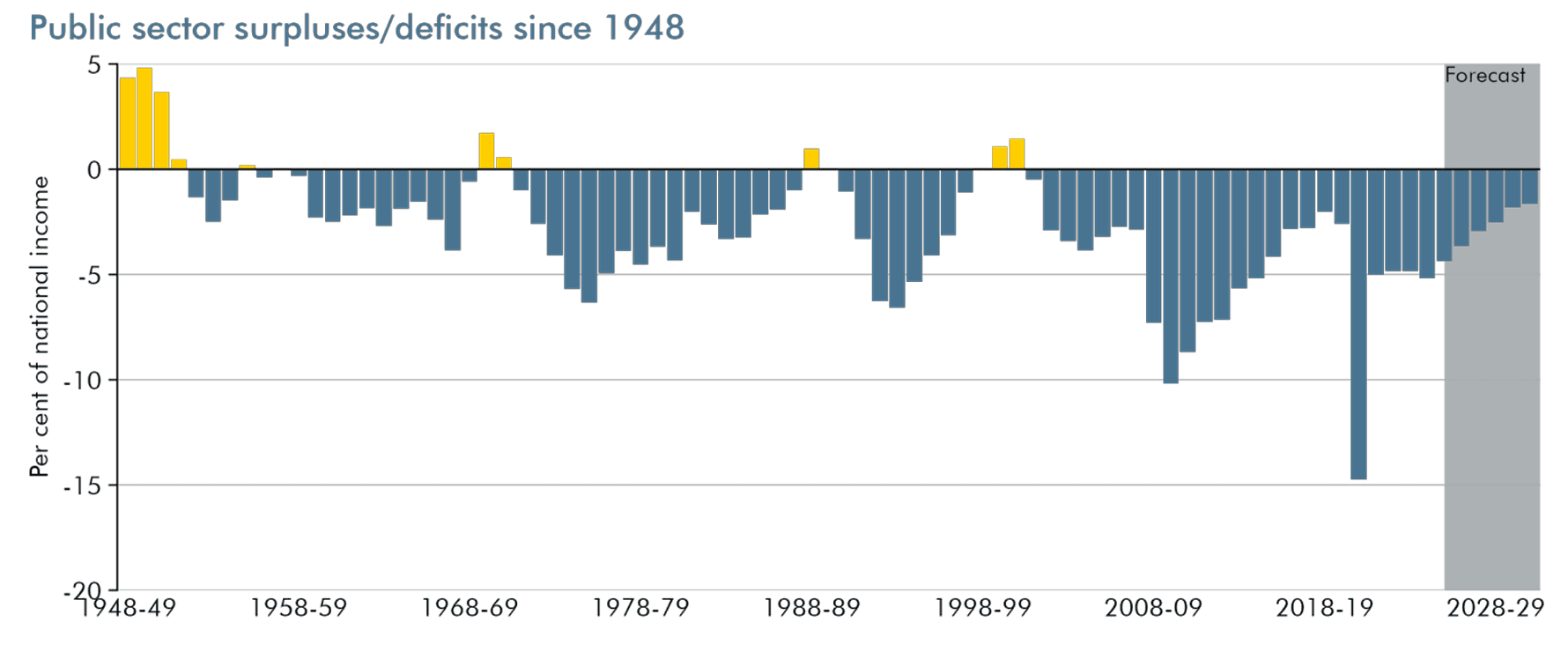
Above: The fiscal rule means borrowing as a proportion of GDP must be falling in the forecast horizon. How is that consistent with Burnham's agenda?
He has since walked this back, saying in an ITV interview, "I never said you can just ignore the bond markets."
In fact, we've seen Burnham is quite happy to sway with the wind on policy, and that's a concern for investors, particularly if he is simply ordained as the next PM without scrutiny.
Burnham will find that the constraints of the fiscal rules mean his radical agenda (council house-building, public ownership, regional investment) will only be possible if he cuts spending drastically elsewhere and raises taxes.
With the tax burden at post-war highs, and the Labour Party unwilling to consider lower social spending, it invites the question of whether his plans are deliverable at scale at all.
"Several of Burnham’s advisers, including Andy Haldane and Jim O’Neill, have argued that the rules are too restrictive and risk constraining economic growth‑enhancing investment. The market reaction to a potential Burnham premiership will depend heavily on when any fiscal changes are announced, how they are presented, and who he appoints as chancellor. So far, Burnham has offered little clarity on the policies he would pursue. For now, we expect fiscal uncertainty to remain a headwind for GBP/USD," says Hammoud.
Potential Tax Rises
With Burnham's agenda hemmed in by borrowing constraints and the Labour Party's unwillingness to reduce spending elsewhere, it will fall to tax rises to fund his ambitions.
According to political website Guido Fawkes, Burnham's economic architect is economist and current Peckham MP Miatta Fahnbulleh. She recommends, among other things:
- A wealth tax and another windfall tax on oil and gas.
- Mass nationalisation e.g. of land, transport, and energy.
- Extending national insurance to investment income.
- A cap on interest rates and charges on every form of consumer credit.
- Hiking capital gains tax to income tax levels.
- Hiking divided tax to income tax levels.
- Abolition of the upper earnings limit for national insurance.
- Huge expansion of the benefits system, including a "minimum income guarantee" paid to everyone apart from the rich.
- Nationalisation of banks and creation of new "green" banks with taxpayer funds.
- Block on private banks lending to anyone with a "large amount of greenhouse gas emissions" and "penalisation of banks that provide too many carbon-intensive loans."
- Forced sale of existing businesses to employees.
- A tripling of the stamp duty surcharge to 9% for multiple homeowners and an increase to 6% for non-residents.